
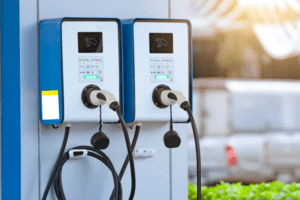
EV Charging IoT Connectivity
Keep Your EV Chargers Online.
LinkWorx delivers the essential
With IoT connectivity your EV charging network needs to ensure maximum uptime, operational efficiency, and customer satisfaction. LinkWorx delivers EV Charging IoT Connectivity in the USA, built for performance-driven operators.
A Smarter, More Reliable Charging Network
Efficient Remote Management
Monitor and control your entire network of charging stations without intuitive remote EV charger monitoring connectivity. Remotely manage usage, optimize charging times, and analyze real-time data to reduce operational costs and enhance the customer experience.
Proactive Maintenance & Uptime
Don’t wait for an angry customer to report a down station. Our IoT SIM for EV charging real-time analytics detects and reports malfunctions or connectivity issues before they become problems, ensuring your network remains operational and dependable.
Never Lose Connection: The LinkWorx Failover System
A disconnected charger means lost revenue and a frustrated driver. Our intelligent failover connectivity for EV charging stations automatically switches carriers if the primary network fails.
This guarantees uninterrupted cellular connectivity for EV charging stations, keeping chargers online, payments processing, and drivers satisfied without manual intervention.
Frequently Asked Questions About EV Charger Connectivity Solutions
What type of connectivity is best for EV charging stations in the USA?
The most reliable option is secure, multi-carrier cellular connectivity for EV charging stations. Unlike Wi-Fi or fixed broadband, cellular connectivity provides independent, infrastructure-agnostic performance with nationwide coverage. Combined with intelligent routing and redundancy, it ensures consistent EV charging network connectivity, even in remote or high-traffic environments where reliability directly impacts revenue.
What is failover connectivity for EV charging stations, and how does it work?
Failover connectivity for EV charging stations automatically switches your charger to a secondary carrier if the primary network experiences downtime. This seamless transition prevents service interruption, maintains session continuity, and protects payment processing connectivity for EV chargers, ensuring drivers can complete transactions without disruption or manual intervention.
Why is cellular connectivity preferred over Wi-Fi for EV chargers?
Wi-Fi depends on local internet infrastructure, which can be unstable or vulnerable to outages. Dedicated LTE connectivity for EV chargers provides secure, carrier-grade performance independent of on-site broadband. This improves uptime, strengthens cybersecurity, and supports consistent remote EV charger monitoring connectivity, especially across distributed or unmanned locations.
What is an IoT SIM for EV charging, and how is it different from a regular SIM?
An IoT SIM for EV charging is purpose-built for machine-to-machine communication. Unlike consumer SIMs, it supports remote provisioning, multi-network access, static IP options, and enhanced security. It ensures stable EV charger connectivity solutions at scale, allowing operators to centrally manage thousands of charging points nationwide.
How does connectivity impact EV charger payment processing?
Reliable payment processing connectivity for EV chargers is critical for transaction authorization, billing validation, and settlement confirmation. Any network disruption can result in failed sessions or lost revenue. Robust EV charging network connectivity ensures real-time transaction processing, supports contactless payments, and maintains compliance with financial security standards.
How does remote EV charger monitoring connectivity improve uptime?
Advanced remote EV charger monitoring connectivity enables real-time diagnostics, performance tracking, and instant alerts when anomalies occur. Operators can detect connectivity drops, power issues, or firmware errors before drivers are affected. This proactive management reduces downtime, lowers maintenance costs, and preserves customer satisfaction.
Is LTE connectivity sufficient for large-scale EV charging networks?
Yes. Modern LTE connectivity for EV chargers provides more than adequate bandwidth for session authentication, telemetry, firmware updates, and payment processing. LTE remains the most widely supported and stable nationwide infrastructure in the U.S., making it ideal for scalable EV Charging IoT Connectivity USA deployments.
What ROI can I expect from reliable EV charger connectivity solutions?
High-performance EV charger connectivity solutions directly protect revenue by minimizing downtime, preventing failed transactions, and reducing truck rolls for manual diagnostics. Built-in redundancy and remote management improve operational efficiency. For growing networks, dependable EV charging network connectivity significantly increases asset utilization and long-term profitability.
Ready to Build a Best-in-Class EV Charging Network?
IoT technology holds immense potential for the EV industry. LinkWorx provides secure, carrier-agnostic EV Charging IoT Connectivity USA designed for growth, stability, and long-term profitability. Contact us today to learn more.