
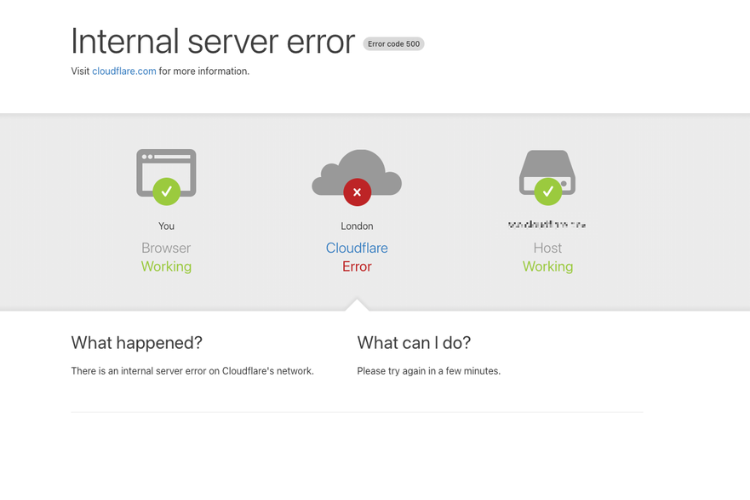
The recent Cloudflare outage reminded the world of a critical truth: even the most robust providers can fail. For several hours, websites, applications and platforms across industries were down or severely degraded. Businesses scrambled, users were locked out, and entire digital experiences froze.
While Cloudflare resolved the issue, the event exposed a structural weakness in the way many companies design their connectivity: over-reliance on a single provider.
If your organisation depends on uninterrupted connectivity, these insights matter.
What Is a Single Point of Failure, and Why Does It Matter?
A single point of failure is any component, hardware, software, or provider, whose malfunction brings down your entire system or disrupts your user experience. In connectivity, a SPOF often shows up as:
- A single network provider
- A single carrier
- A single route for critical data
- A single cloud or API dependency
When everything flows through one system, any failure becomes catastrophic.
In theory, major providers build highly redundant internal infrastructures, but in practice, external redundancy (using multiple providers) matters just as much. No matter how strong one provider is, it can still fail, and when it does, your business fails with it.
What the Cloudflare Outage Revealed About Global Internet Dependencies
Cloudflare is a massive presence on the internet: CDN, DNS, security services, traffic acceleration, bot mitigation and more. Fifteen minutes of downtime can ripple across millions of end users.
During this outage:
- Thousands of businesses experienced downtime
- Authentication systems failed
- APIs timed out
- Websites showed 5xx errors
- Users couldn’t log in, load pages or complete transactions
And importantly: the outage wasn’t caused by a cyberattack, but by a technical malfunction. This is key. It shows that risk doesn’t only come from external threats, it also comes from normal operational complexity.
Even the best providers can experience unexpected failure.
That’s why the Cloudflare incident is not a criticism of Cloudflare.
It’s a lesson in dependency management.
The Business Impact of Connectivity Outages: More Than Just “Downtime”
Connectivity outages affect much more than website availability. The consequences span across the entire organisation:
1. Lost Revenue
An unresponsive website or payment gateway can instantly halt transactions. Every minute of downtime is measurable monetary loss.
2. Degraded Customer Trust
Customers rarely care why the service was unavailable. They only know that it failed. Repeated experiences can permanently damage brand perception.
3. Operational Delays
Internal tools dependent on online connectivity (CRM, ERP, communication systems) can freeze, slowing teams across departments.
4. Security Risks
When systems misbehave, backup processes, authentication flows or automated protections may activate incorrectly or fail to activate at all.
5. Hidden Interdependencies Reveal Themselves
Sometimes, the outage of one provider breaks something you didn’t even know relied on it.
The Cloudflare incident revealed a sobering truth:
Most businesses unknowingly depend on a single point of failure, and discover it only when it breaks.
Why Redundancy Is No Longer Optional in Modern Connectivity
In a digital-first economy, connectivity is the bloodstream of every business. Redundancy is not a luxury, it is a business continuity requirement.
Redundancy Provides:
- Failover Capabilities: Traffic reroutes immediately when one path fails.
- Multiple Providers: No single outage can take your organisation fully offline.
- Geographic and Carrier Diversity: Coverage remains strong even in region-specific disruptions.
- Performance Stability: Bottlenecks in one network don’t slow down everything.
- Greater Security: More independent paths strengthen your overall posture.
Businesses that build redundancy into their infrastructure experience fewer disruptions and recover faster when issues arise.
How MSIM Delivers Resilient, Multi-Path Connectivity
MSIM isn’t a competitor to Cloudflare. It serves a different purpose:
ensuring that your connectivity doesn’t depend on one provider, one carrier, or one point of failure.
Here’s how MSIM strengthens business continuity:
1. Multi-Carrier Support
Instead of relying on a single network, MSIM connects through multiple carriers. If one fails, another instantly takes over.
2. Smart Routing & Path Diversity
MSIM intelligently evaluates available routes and switches traffic to the most reliable, lowest-latency option automatically.
3. Built-In Failover & Resilience
Outages, maintenance windows or regional congestion don’t bring operations down.
4. Global Reach With Local Stability
Whether your team or infrastructure is distributed internationally, MSIM ensures high-quality service across regions.
5. Operational Visibility & Control
Monitor network performance, identify bottlenecks and proactively manage connectivity, rather than waiting for things to break.
When Cloudflare or any other major provider experiences disruption, MSIM-designed architectures keep businesses running.
Why the Cloudflare Outage Should Change How You Think About Connectivity
If one outage can impact so many organisations at once, it means the internet’s reliance on individual centralised providers is deeper than most leaders realise.
This is not about blaming providers. It’s about upgrading business strategy.
Key Lessons for IT, CTOs and Business Leaders
- One provider is not enough, even if they are world-class.
- Redundancy must be external, not just internal.
- Digital businesses need multi-path architectures to protect customer experience.
- Business continuity depends on proactive design, not reactive fixes.
- Connectivity is a strategic asset, not an operational afterthought.
Forward-thinking organizations are already re-architecting their connectivity to avoid future outages, before the next disruption happens.
Build for Resilience Before You Need It
The Cloudflare outage was a global disruption, but also a global warning. Businesses that rely on a single provider for connectivity are exposed to risks beyond their control.
Resilience isn’t about eliminating failure. It’s about ensuring that when failure happens, your business keeps running.
MSIM offers a connectivity model built for the modern era: redundant, adaptive, multi-carrier, and failover-ready.
If you want to reduce risk, protect uptime and ensure stable digital operations, now is the time to rethink your connectivity architecture. Don’t wait for the next outage to impact your operations.
MSIM keeps your connectivity stable even when major providers fail. Book a free consultation to understand how MSIM can take your business to the next level!